
Why Spokane Roofs Spring Leaks
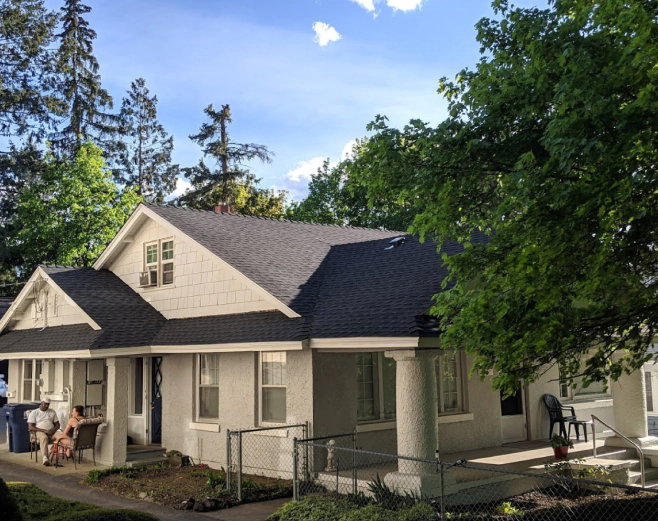
Walk the historic blocks of Browne's Addition or the established streets of the South Hill and you'll see craftsman and Victorian rooflines with pitches steep enough to be intimidating. Those roofs shed snow beautifully, but their valleys, dormers, and chimney transitions collect ice and water in ways the original flashing details were never asked to handle. When a December cold snap locks snow onto the roof and a thaw three days later releases it, that meltwater finds every gap a previous installer left behind.
Most leaks here aren't one dramatic failure. They're slow and seasonal, tied to detail work: a cricket behind a chimney that was never built, step flashing that got caulked instead of woven, or a valley funneling more water than its underlayment can carry.
Storm and Ice-Dam Damage Across the City
The North Side and Five Mile catch their share of summer hail and the dry, gusty winds that lift and crack aging shingles. The flat and low-slope roofs around downtown deal with ponding and tired membrane seams. And nearly everywhere in Spokane, ice dams form along the eaves when escaping attic heat melts the snowpack and it refreezes at the cold overhang.
- Wind and hail: lifted, creased, or bruised shingles that shed granules and fail early
- Ice dams: water backing up under shingles and into soffits, fascia, and ceilings
- Flashing failures: chimneys, skylights, pipe boots, and wall transitions dried out and pulled loose
- Valley wear: the highest-volume part of any roof and the first to leak on a steep older home
How We Diagnose Before We Repair
A leak rarely shows up on the ceiling directly below where water enters. On a steep roof near Manito Park, water can travel several feet along a rafter before it drips. So we trace the path, not just the stain, inspecting the attic where access allows, checking every penetration and flashing detail, and reading the surrounding shingle field for the wear pattern that explains why the failure happened.
Then we tell you honestly whether a targeted repair will hold or whether you're patching a roof near the end of its life. If a repair makes sense, we do it. If you'd be throwing money at shingles that are curling across the whole roof, we'll say so and walk you through the alternative instead.
Materials and Repair Options
As a GAF Master Elite contractor, a status held by only the top 2 to 3 percent of roofers nationwide, we install the full GAF system the way its warranty requires. For a repair that means matching your existing shingle profile and color as closely as possible, rebuilding flashing in metal rather than leaning on sealant, and adding ice-and-water shield in the valleys and eaves where Spokane's ice dams concentrate their damage.
Common fixes include re-flashing chimneys and skylights, replacing cracked pipe boots, rebuilding worn valleys, swapping out wind-damaged shingle sections, and correcting the ventilation problems that drive ice dams in the first place. When spot work isn't enough, see our approach to a full roof replacement.
Warranties That Outlast the Repair
Every repair we make carries our 15-year workmanship warranty, so the labor stands behind itself for years rather than weeks. When a repair grows into a replacement, that work qualifies for GAF Golden Pledge coverage with 30- and 50-year material protection and the longest workmanship term GAF offers. We're licensed and insured in both Washington and Idaho, and replacements include 150 feet of free gutters to keep meltwater moving away from the eaves where ice dams start.
Flexible financing is available if a storm caught you off guard. We'd rather you stop the leak now than watch it rot the decking through another winter.
Talk to a Spokane Roofer Today
DG Contracting LLC is a Colbert-based, family-run crew that has worked Spokane roofs since 2013, and our 5.0-star rating across 288 Google reviews comes from homeowners who needed a leak solved, not an upsell. Estimates are always free, and we're out working Monday through Saturday, 7 to 6.
Call (509) 209-1894 to schedule an inspection. We'll find where the water is really getting in and give you a straight answer on what it takes to stop it.